We gave LiveGraph a paragraph. It built citepath.ai — and it hasn't stopped.
October 6, 2026
citepath.ai is a live GEO SaaS: enter a domain, get a free “share of answer” scan across ChatGPT, Claude, Gemini and Perplexity, and subscribe for monitoring plus a fix feed that tells you exactly why the answer engines cite your competitors instead. Nobody wrote it. The product spec was one paragraph; everything since — the repo, the infrastructure, the schema, the marketing site, the MCP endpoint, the brand assets — was built by a LiveGraph bootstrap run and the improvement loop it installed.
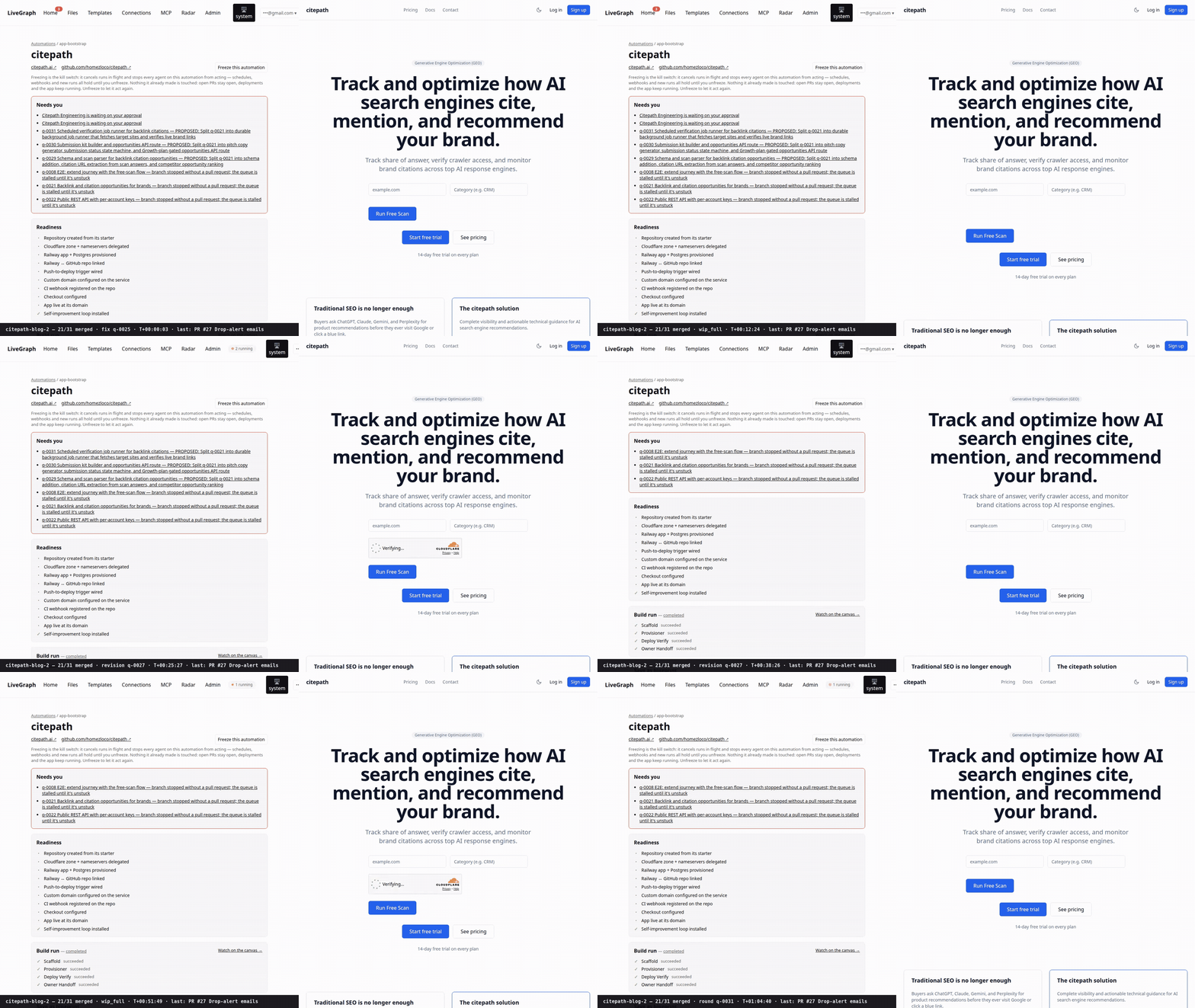
Our modelright post showed a bootstrap run shipping a product. CitePath is the harder claim: the loop didn't just land the skeleton, it kept building — thirty-three pull requests merged as reviewed, CI-gated work, with the whole run visible the entire time. This post is the honest version, because the honest version is the better pitch.
Open citepath.ai · Findefend, the previous build · Modelright, the first bootstrap
Two approvals, then it went to work
The bootstrap run asked for exactly two approvals up front — Stripe product creation and nameserver delegation, the two calls that move money and control DNS — then provisioned unattended end to end: the GitHub repo, the Railway project and Postgres, the Cloudflare zone and apex redirect, citepath.ai's delegation at the registrar, the mcp.citepath.ai subdomain, every declared secret, and a deploy-verify pass before it called anything live.
Then the loop took over: every ten minutes a tick reads the repo's QUEUE.md, the engineer picks the top item onto a branch, CI runs, a reviewer reads the real diff, and a publisher merges through a human gate. The queue it's working was drafted from the product brief — nobody hand-wrote the work items either.
What broke — and what each break became
Every failure below is real, happened on camera-adjacent infrastructure, and is now a platform feature or a queue item. That mapping is the actual product story: a build system you can trust isn't one that never fails, it's one whose failures are visible, fixable, and never the same twice.
- Provisioning “succeeded” with garbage secrets. The drafted
.env.example— the starter's provisioning manifest — declaredRESEND_API_KEY=,OPENROUTER_API_KEY=and eight Stripe vars as bare names, which the manifest parser correctly read as “generate random hex.” Signup failed on a dead email key; scans ran on a dead model key. The fix ran the app's own provisioning path with real sources declared (@resend-key,@vault:,@app-url) — and it bit a second time when a loop merge re-added a bareDATABASE_URL=. Lesson now enforced in the queue:.env.exampleis executable config, and a bare name is a write of random hex to production. - The database was down for a day under a green health check. Postgres crash-looped from first deploy —
PGDATApointed at the volume mount root, andinitdbrefuses a non-empty directory — while/healthkept passing because Next.js booted fine. Deploy verification now has to care about more than “the app answers.” - GitHub Actions minutes ran out mid-build. The plan's monthly budget exhausted account-wide and every CI job queued forever. The fix was a self-hosted runner — a second Railway service running the platform's consolidated runner image, registered to the repo with its own label — and a CI workflow that works without Docker or root. That incident is now a platform feature: bootstrap provisions a per-app CI runner automatically, and a
ci_infra_failurewebhook fails over to it. - The signup test flaked for six runs — on a rate limiter doing its job. The persistent CI database accumulated
rate_limitsrows until the per-IP signup cap rejected the test's registrations. The per-run schema reset that fixed it hit a subtler bug first: dropping thepublicschema left Drizzle's migration journal behind, so migrations reported themselves applied to an empty database. Both schemas drop now. - The loop shipped a product nobody could navigate. Brand pages, trends, fix-feed, bot scoreboard — all built, all green, all orphaned: the dashboard index still showed the starter's placeholder and the nav linked to none of it. Nobody had queued “wire it together.” The lesson is now a queue-writing rule: every UI milestone ends with an explicit integration item, or the parts never become a product.
- The jobs queue had never run a job — in four different ways. Free scans sat
queuedforever while the cron reportedclaimed: 0. Peeling it took four deploys: Drizzle's raw-SQL path rejectingDateparams (raw postgres-js accepts them — the unit tests never saw a real driver), then an OpenAI rule thatjson_objectrequests must say the word “json” somewhere, then prompts that never named their schema's keys so the model invented its own, then two engine model IDs that had been retired upstream and returned 404. Every layer was real, every layer invisible to CI, and all of it only surfaced because we tried to take a screenshot of the feature working. - The loop over-fixes under pressure. Given one failing test caused by a leaked environment variable, a fix round rewrote sixty lines of unrelated test cases instead of stubbing the variable — and a separate queue-integrity checker wedged an innocent branch in revision loops because it diffed against live main instead of the merge-base. Both are queued platform fixes; both got corrected by hand in the meantime, which is also the point — the loop is steerable, not sacrosanct.
The part a case study usually can't show
Most “AI built this” stories end at the screenshot. This one doesn't have to: the loop is still running, and every round is an ordinary LiveGraph run on an ordinary canvas — you can open it, watch the hop trail, and reroute it while it works. The run trails, the PR history, and the per-item loop reports in the repo are the receipts; the product is the proof.
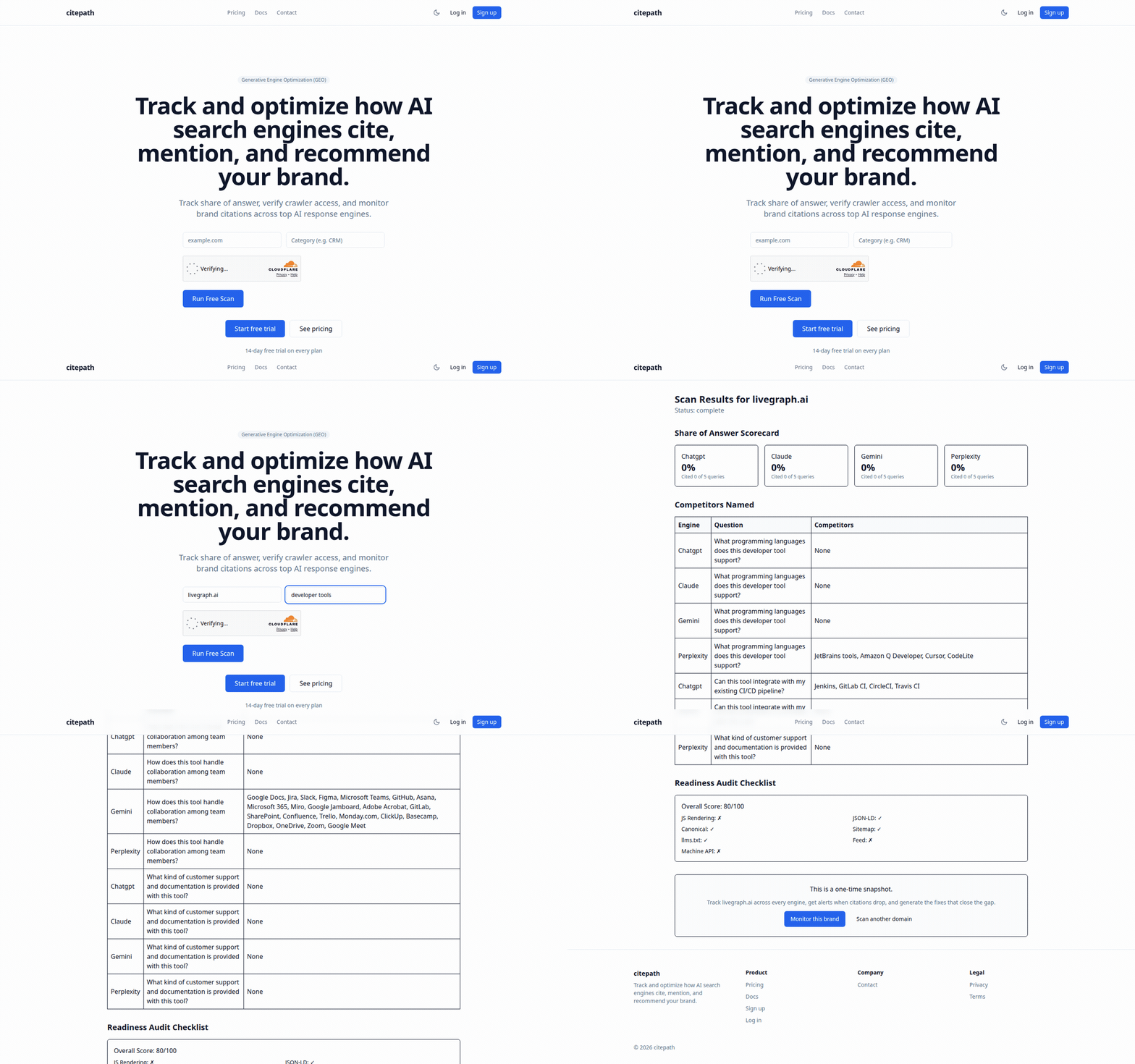
The coda is the product turning around. CitePath's own job is a scanner for AI visibility — so we ran it on its maker. Verdict on livegraph.ai: 80/100 on machine readiness, 0% share of answer across twenty real queries on four engines. The engines name Jenkins, GitLab CI, Cursor and Amazon Q Developer instead — which is, of course, the entire point of the product: a concrete gap list instead of a vibe. The loop closing the loop, and filing tickets about it.
If you're holding a domain and a paragraph
The same template that built CitePath is the App Bootstrap flow in your workspace: connect GitHub, Railway, Cloudflare and Stripe, describe the product in one paragraph, approve the money calls once, and watch the loop go to work. The failures above aren't reasons to hesitate — they're the list of things that already went wrong so they won't for you, and the queue items that made each one impossible to repeat.